
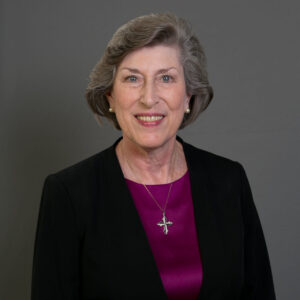
President Emerita
Carroll Stuhlmueller, C.P. Distinguished Professor of New Testament Studies
Readings:
Isaiah 60:1-6
Psalm 72:1-2, 7-8, 10-11, 12-13.
Ephesians 3:2-3a, 5-6
Matthew 2:1-12
ALL ARE WELCOME
On this joyous feast, all the readings underscore the welcome extended to
all in God’s embrace. Isaiah speaks of how peoples from every nation will
stream toward the renewed Jerusalem, all bearing their gifts and proclaiming
God’s praises. The responsorial psalm likewise sings of how every
nation on earth will adore God’s Anointed One. The letter to the Ephesians
emphasizes that “the Gentiles are coheirs, members of the same body, and
copartners in the promise in Christ Jesus through the gospel” (3:6). There
are no second-class members and no privileges for those who had priority
in the faith. All are equal comembers.
The gospel recounts that exotic visitors from the East were the first
to do homage to the newborn Jesus. The term “magi” originally referred to a caste of
Persian priests. They were not kings themselves but served their king with
skills such as interpreting dreams. In the gospel they also appear to be adept
at interpreting the movement of the stars. Following the star, they are the
first Gentiles to seek and recognize Jesus, offering their precious gifts to
him. In so doing, they foreshadow the way Gentiles will flock to the Christian
communities, bearing gifts for mission.
The strong insistence in the letter to the Ephesians on the equal status of Gentiles,
backed up with the assertion that this has now been revealed to the apostles and prophets
by the Spirit, shows how the early Christian communities struggled to make
this equality a reality. The difficulties in welcoming Gentiles have long ago been
overcome, but other struggles to create egalitarian communities still face us today.
On December 3, President Trump declared that if you hail from Afghanistan, Myanmar, Chad, the Republic of Congo, Equatorial Guinea, Eritrea, Haiti, Iran, Libya, Somalia, Sudan or Yemen you are not welcome in the United States. And if your home country is Burundi, Cuba, Laos, Sierra Leone, Togo, Turkmenistan or Venezuela, you are welcome only if you undergo additional scrutiny. Efforts to exclude transgender persons from sports, the military, and more, are in full swing. People from Somalia were told explicitly by the President that he does not want them in this country. More than 605,000 immigrants have been deported from the U.S. this year, some of whom have been peaceful, contributing citizens for decades. Almost 2 million more left voluntarily this year, knowing they were unwelcome and fearing deportation.
And yet, there are individuals and communities that are working tirelessly in private and public ways to ensure that all are welcome. Chicago residents have blown whistles to alert vulnerable neighbors to the presence of ICE agents. Some have protested at the detention facility in Broadview. Some are doing grocery shopping and laundry for neighbors too afraid to leave their homes. Some are escorting children of frightened parents to school and home again. In Evanston, people with disabilities were invited to a barrier-free Christmas orchestral concert the Sunday before Christmas. In ordinary concert settings, these people are not welcome because of the way the music moves them to vocalize and move around in ways that others find distracting. In Adrian, Michigan, college students from Burkina Foso, one of the countries under a travel ban to the U.S., are being “adopted” by families who are helping them navigate through multiple challenges.
On this Epiphany Sunday, our Scriptures and the inclusive practices of Jesus give us a guiding star to follow in our efforts to be inclusive and welcoming to all. Prejudices, racism, and discrimination run deep. Facing our own prejudices and working to dismantle them is a most difficult task. It can take a lifetime, but it is possible to do with the help of the Spirit, who continues to reveal that all have equal dignity and are welcome.
Barbara E. Reid, O.P.
President Emerita
Carroll Stuhlmueller, C.P. Distinguished Professor of New Testament Studies